Showing posts with label Plate tectonics. Show all posts

Sunday, 1 November 2020

News in brief: 26th October - 1st November 2020

Heavy rain hits England and Wales
Parts of the UK are bracing for heavy rain and strong storms this weekend and into next week; Wales is thought to be hit the worst and the environment agency has issued several flood warnings to help people prepare and stay alert
Click here to read more...

Earthquake strikes Turkey
A deadly earthquake has struck just off the coast of Turkey and Greece with a magnitude of around 7.0 on the Richter Scale; it is thought that 20 people have died with a further 786 injured and rescue teams are on the search for any survivors who may be buried in the wreckage
Click here to read more...

Hurricane Zeta causes storm surges in the US
Another hurricane has hit the south coast of America this week with wind speeds of around 100mph; buildings have been severely damaged and power cables have brought down meaning that around 2.6 million people were without power for some time
Click here to read more...

Monday, 23 September 2019

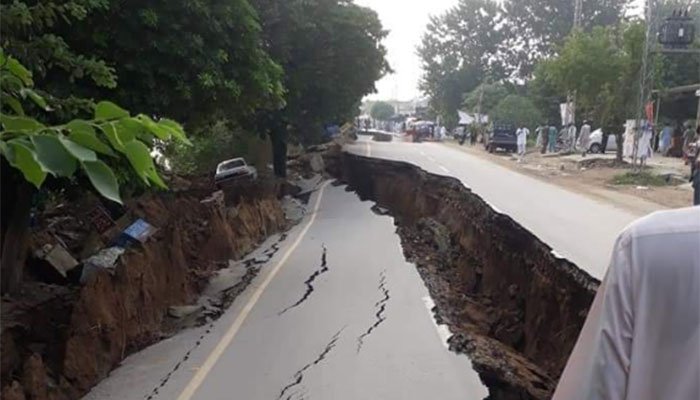
In pictures - Pakistan earthquake

A tremor of 5.8 magnitude occurred in Pakistan, causing damage to roads and 19 deaths (Image credit: Geo.tv)
>> What might be the primary and secondary impacts of this earthquake? How can countries be more prepared for earthquakes?

Thursday, 29 August 2019

In pictures - Stromboli erupts

Italy's Stromboli volcano erupts again (Image credit: BBC)
>> What might the primary and secondary impacts of this be? Is it a danger if it is on an island?

Thursday, 11 October 2018

News in brief - Thursday 11th October

Weather warnings ahead of Storm Callum
Storm Callum is set to bring severe gales and rain to parts of Ireland over the weekend; travel is expected to be disrupted with several Flyby flights already cancelled and trains operating under speed restrictions

Earthquakes shake South-East Asia
A magnitude 7.0 earthquake struck the islands of Papua New Guinea in the early hours of Thursday morning and a magnitude 6.0 earthquake also shook the island of Bali; a tsunami warning was issued but has since been cancelled

Hurricane Michael causes widespread devastation
One of the strongest hurricanes to hit the USA in recent years has caused flash floods, fallen power lines and landslides; the category 4 hurricane had sustained wind speeds of 155mph and continued intensifying even when it moved inland

Sunday, 7 October 2018

In pictures - Haiti earthquake strikes again

A 5.9 magnitude earthquake has struck Haiti killing 12 people; many residents are still living in temporary shelters from when a devastating quake struck the region in 2010
>> Create a fact file that compares the earthquakes in 2010 and 2018

News in brief - 6th/7th October

Climate change warnings
A recent report by the IPCC states that we are no longer on track to stay within a warming limit of 1.5 degrees celsius, and that a warming of around 3 degrees celsius is more likely; this would mean the end of coral reefs, and would impact on all ocean wildlife as water temperatures rise and ice melts

Tsunamis - the long term response
As the search for survivors in Indonesia begins to wind down, the question is being asked as to whether we are prepared for future tsunamis; early warning systems need to be improved and emergency services better equipped to deal with the damage and chaos

Sinking cities
More and more of the world's cities will be at risk of floods and storm surges as climate change continues to melt ice caps and create bigger storms; city planners are failing to prepare for potential sea level rise, and this is compounded by the growth of cities whose weight literally pushes the land down and lowers it to nearer sea level 

Thursday, 4 October 2018

News in brief - Thursday 4th October

Appeal to help tsunami survivors
The DEC (Disasters Emergency Committee) has today launched an appeal across all forms of media to raise money and awareness for the survivors of the tsunami in Indonesia; people are still suffering immensely, with aid taking a long time to reach remote places and many still living in temporary shelters and being treated in outdoor hospitals

Climate change targets
The IPCC (Intergovernmental Panel on Climate Change) are hopeful that reaching the climate change target of only 1.5 degrees celsius of warming is possible; individual actions (such as eating less meat) and the lowering cost of renewable energies are making the level of emissions more achievable

Waste fuels flights
The first commercial flight partly fuelled by waste has successfully flown from Orlando to London; the plane was fuelled with part jet engine fuel and part ethanol produced from waste gases 

Wednesday, 3 October 2018

News in brief - Wednesday 3rd October

A ban on fishing in the Arctic
A new agreement to be signed in Greenland will ban fishing in much of the Arctic's waters; this new agreement is thought to be necessary as climate change is melting large volumes of ice which is opening up potential for new fishing grounds

Waiting for help
The victims of Indonesia's tsunami are still waiting for help in some remote parts of Sulawesi; collapsed bridges and broken communications are thought to be the main culprits in preventing aid from getting through

Closing Thailand's famous beach
Maya Bay in Thailand is to be closed indefinitely to allow it to recover from the damage caused by the 5,000 tourists who visit daily; the area was made famous by the film 'The Beach', but the beauty of the area has since been lost as tourists bring litter and rubbish and 80% of the coral has now been destroyed

Tuesday, 2 October 2018

News in brief: Tuesday 2nd October

Indonesian quake victims desperately need help
Looting and stealing has become worse in some parts of Indonesia as help is taking so long to get to the victims of the earthquake and tsunami; it was announced today that the death toll has risen further to nearly 1,350

World's biggest battery
South Australia is home to the world's biggest lithium ion battery; it obtains its energy from a nearby wind farm, and its purpose is to stabilise energy security by topping up the power supply and preventing blackouts

Raising the spotlight on plastic waste
A BBC documentary has tried to bring to light the problem of plastic waste in our oceans and the damage it can do to wildlife; the programme also investigated some of the ingenious solutions to the plastic problem, such as planting sea grass meadows and making plastic-like materials out of seaweed

Monday, 1 October 2018

In pictures - tsunami wreckage

An aerial view of the wreckage left by the recent tsunami in Palu, central Sulawesi (Image credit: Reuters)
>> Can you find out how many earthquakes Indonesia has had this year?

News in brief - Monday 1st October

Indonesian quake death toll rises
At least 844 people are thought to have died since the earthquake and tsunami struck the island of Sulawesi on Friday; it is feared that the total death toll may yet rise as some remote areas have yet to be contacted

Latest climate change report findings
Top climate scientists are to meet in South Korea this week to discuss the findings of the IPCC's latest report on climate change; the discussions will focus around the need to keep warming to a minimum rise of 1.5 degrees celsius, and how best to do this without compromising quality of life and development

New transport links in the Arctic
A Danish ship has successfully travelled from Europe to Asia through the Russian Arctic in a trial run which saw the journey time cut by five days; it is thought this could become a regular route if global warming continues and a reduction in ice frees up the passage for increasing months of the year

Sunday, 30 September 2018

In pictures - Indonesian tsunami

Rescuers work to free people trapped in rubble following the violent earthquake and tsunami in Sulawesi, Indonesia (Image credit: Reuters)
>> Find out the names of the plates and type of plate boundary on which this part of Indonesia sits

News in brief - 29th/30th September

Indonesian earthquake and tsunami
Over 800 people have been killed and many more are injured or missing after an earthquake and subsequent tsunami swamped the island of Sulawesi in Indonesia; a 7.5 magnitude earthquake triggered the surge of water that swept inland affecting the city of Palu and many other towns and villages, where the search and rescue mission still continues

Owls in decline
The general public have been asked to listen out for the sound of owls in their back garden, park or any green space over the next six months to help get an idea of their distribution; it is thought that light pollution and urbanisation are having a negative impact on population numbers

National Get Outside Day
Today is the UK's National 'Get Outside Day', a day that tries to raise awareness of the increasing trend of people to be inactive and not make the most of local green spaces; events are being held across the country for people to join in with walks in the fresh air and countryside, and increase their physical and mental well being as a result of engaging with nature

Monday, 24 September 2018

In pictures - Indonesian volcano

The Indonesian volcano Anak Krakatau began erupting at the weekend and locals and tourists have been advised to stay away (Image credit: Reuters)
>> Discuss: what might the impact of this eruption be on the land and on people?

Sunday, 16 September 2018

Comment: can our world cope with increasing numbers of natural disasters?

Despite rapid economic growth, some of our most developed nations are struggling to cope with the realities of climate change and the impacts of increasing numbers of natural disasters. 

Chaos after Typhoon Jebi (Image credit: EPA)
Japan is a recent example that has dominated the headlines after experiencing a series of natural disasters.  Although it has become one of the top ten wealthiest nations, it remains a victim of the horrifying impacts of torrential rainstorms, a devastating typhoon, and yet another disastrous earthquake on account of the fact it sits precariously on the Pacific Ring of Fire (a plate boundary around the Pacific Plate).

On 4th September 2018, Typhoon Jebi hit the outer islands of Japan with wind speeds of around 175mph.  Air and land travel was severely disrupted with thousands of people stranded and tankers beached on harbor walls. This chaos and loss of life was further compounded by an 6.7 magnitude earthquake that followed just days later, causing landslides that buried houses and caused power cuts due to the weakened ground collapsing after the torrential rains and tropical storm winds.

These natural disasters are seemingly unavoidable, but the question remains as to whether a developed country like Japan should be better prepared to mitigate and respond to the impacts it faces.  After all, there are around 14 significant tropical storms in the Pacific Ocean every year, and Japan experiences around 1,500 tremors and earthquakes annually.  Is the developed world struggling to implement what is has learnt from previous lessons? Or perhaps the scale of natural disasters (especially when they follow one after another) is now too much to cope with? 

As the US enters its hurricane season, over 1 million people have been ordered to evacuate their homes on the east coast and head inland.  Is this yet another example of a developed nation unable to cope with the force of Mother Nature? 

Some might argue that we simply have to do what we can.  Others may consider the extent to which we are now simply dealing with the consequences of years of human abuse of resources such a fossil fuels, which has contributed to the global warming that is now fuelling our super storms.  

Can we rely on our wealth and experience to save us?  Or will we simply have to hold tight and weather the storm?

>> Discuss: To what extent can High Income Countries (HICs) cope with the increasing number of natural disasters?
>> Explain: Describe and explain different strategies that countries can use to mitigate the impacts of natural disasters
>> Explore: in groups, gather information for the following interest groups (The World Bank, governments, scientists, emergency services, local residents) and debate the role of each group in preparing for and reacting to natural disasters